
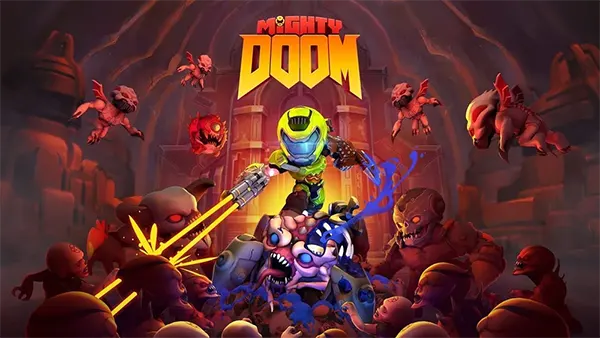
Mighty DOOM represents a deliberate shift in how a fast-paced, skill-heavy shooter can be translated to mobile devices without losing its identity. Instead of replicating the full-scale experience of classic DOOM titles, the developers focused on short sessions, simplified controls, and progression systems suited to touchscreens. The result is a game that retains recognisable mechanics—movement, shooting, and enemy patterns—while adapting them to modern mobile expectations in 2026.
Core Gameplay Changes: From PC Shooter to Mobile Format
The original DOOM series is built around precision aiming, fast reactions, and open-level exploration. On mobile devices, these elements require rethinking. Mighty DOOM introduces auto-fire mechanics, where the character shoots automatically when enemies are in range. This removes the need for dual-stick precision aiming and allows players to focus on movement, which becomes the primary skill factor.
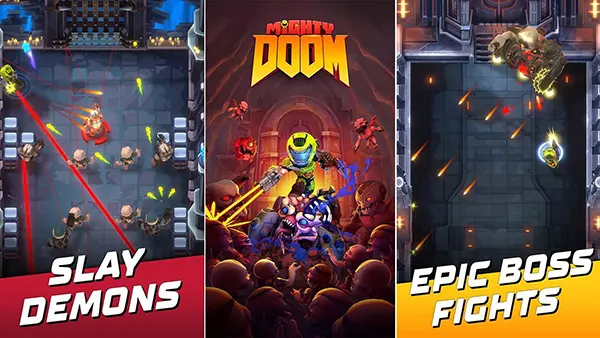
Levels are redesigned into compact, room-based encounters. Instead of large maps, players progress through a sequence of arenas, each lasting under a minute. This structure reflects how mobile users typically engage with games—short bursts rather than extended sessions. It also enables a clear sense of progression within limited playtime.
The difficulty curve is structured around gradual escalation rather than immediate intensity. Early stages teach movement patterns, enemy recognition, and positioning. Later stages introduce combinations of enemies and hazards, requiring strategic decision-making rather than pure reflex.
Touch Controls and Interface Design
The control scheme is intentionally minimal. Movement is handled through a single virtual joystick, while shooting occurs automatically. This reduces input complexity and lowers the barrier to entry, particularly for players unfamiliar with traditional shooters.
The interface prioritises clarity. Health, abilities, and progression indicators are displayed without clutter, ensuring that players can focus on incoming threats. Visual feedback—such as damage indicators and enemy animations—is enhanced to compensate for the absence of precise manual aiming.
Another key adjustment is responsiveness. Mobile gameplay depends heavily on latency and input accuracy. Mighty DOOM is optimised to ensure immediate response to player movement, which is critical when dodging projectiles in tight spaces.
Progression Systems and Replayability
Unlike classic DOOM games, which rely on level completion and narrative flow, Mighty DOOM integrates a progression system based on upgrades and equipment. Players collect resources during runs and use them to enhance weapons, armour, and abilities. This introduces a long-term engagement loop beyond individual sessions.
Each run offers temporary upgrades that shape gameplay in real time. Players choose from randomised bonuses—such as increased fire rate or elemental effects—creating variation between sessions. This system adds unpredictability while encouraging experimentation with different builds.
The structure resembles roguelike mechanics, where failure is part of the progression. Even unsuccessful runs contribute to overall advancement, reducing frustration and aligning with mobile gaming habits where interruptions are common.
Monetisation and Player Retention
Mighty DOOM uses a free-to-play model with optional purchases. These typically include cosmetic items, progression boosts, or in-game currency. Importantly, core gameplay remains accessible without mandatory spending, which helps maintain balance and player trust.
Retention strategies focus on daily challenges, limited-time events, and reward systems. These features encourage regular engagement without requiring long sessions. Players can complete objectives within minutes, making the game suitable for routine play.
Seasonal updates introduce new content, including enemies, environments, and equipment. This approach keeps the game relevant in a competitive mobile market, where ongoing support is essential for maintaining an active player base.
Visual Style and Technical Optimisation
Mighty DOOM adopts a stylised, almost cartoon-like aesthetic, which differs from the darker tone of traditional DOOM titles. This choice is not purely artistic—it also improves performance on a wide range of mobile devices. Simpler textures and animations reduce hardware demands while maintaining visual clarity.
Enemy design remains faithful to the original series, with recognisable demons and attack patterns. However, animations are adjusted for readability on smaller screens. Clear visual cues help players anticipate attacks, which is crucial when gameplay relies heavily on movement and timing.
Performance optimisation is a central focus. The game is designed to run smoothly across mid-range devices, ensuring accessibility. Frame rate stability is prioritised over graphical complexity, as consistent performance directly affects gameplay quality.
Balancing Nostalgia with Modern Expectations
The developers retained key elements of the DOOM identity—fast movement, aggressive enemies, and weapon variety—while adapting them to modern mobile standards. This balance ensures that long-time fans recognise the core experience, even within a simplified format.
Sound design plays an important role in maintaining authenticity. Weapon effects, enemy sounds, and background music draw inspiration from the original series, reinforcing the connection to its roots.
At the same time, the game avoids replicating mechanics that do not translate well to mobile devices. Instead of forcing complexity, it focuses on accessibility and consistency. This approach reflects broader trends in mobile game design, where usability often takes precedence over depth.