
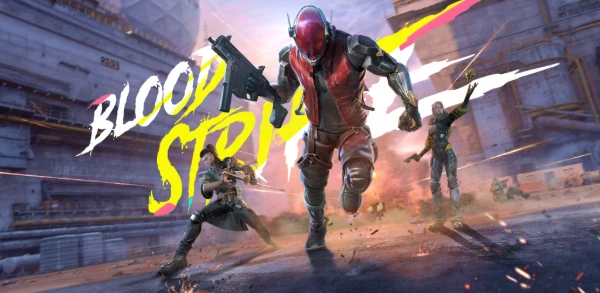
Blood Strike has developed into a distinct alternative to the two established names in mobile battle royale, Call of Duty: Mobile and PUBG Mobile. NetEase has not tried to reproduce either game exactly. Instead, Blood Strike in 2026 centres on quick movement, frequent firefights, Strikers with individual abilities and systems designed to return players to combat without long periods of inactivity. That approach gives matches a noticeably different rhythm from PUBG Mobile’s more deliberate survival format and the broader mix of traditional multiplayer and battle royale offered by COD Mobile. Regular updates throughout 2026 have pushed Blood Strike further in this direction, adding Wildcards, revised respawn mechanics, new Strikers, temporary battle royale variants, third-person play and the Overdrive mode introduced in September.
Why Blood Strike Feels Faster Than COD Mobile and PUBG Mobile
The most obvious difference becomes clear within the opening minutes of a Blood Strike battle royale match. The game is built to keep squads moving towards enemies rather than spending long stretches collecting equipment and avoiding contact. Weapons, cash, shops, abilities and revival systems all support a relatively aggressive style of play. NetEase reinforced this direction at the beginning of 2026 by revising Battle Royale combat pace, the economy and respawn rules. Eliminating opponents can provide Restore Energy from their loot crates, helping restore health and armour while also contributing to character progression during the match. Successful fights therefore do more than remove another squad: they can prepare a player for the next engagement almost immediately.
PUBG Mobile retains stronger roots in the traditional battle royale structure. Its Classic matches continue to emphasise landing decisions, searching buildings, managing equipment, using terrain and vehicles, watching the shrinking play zone and surviving until the final stages. The official game description still presents its core format around up to 100 players entering a battleground and gathering supplies before competing to become the last player or team standing. Maps such as Erangel, Miramar, Sanhok and Livik also differ considerably in size and geography, which can produce long-range encounters, vehicle rotations and quieter periods between fights. The pace can become extremely intense, but constant combat is not the only objective shaping a match.
COD Mobile sits somewhere between those approaches because battle royale is only one major part of a much larger shooter. Its current selection includes conventional Multiplayer, Battle Royale and DMZ: Recon, alongside rotating seasonal modes. Battle Royale itself is spread across maps and formats including Isolated, Krai, Alcatraz and, in 2026, Rebirth Island. Players familiar with Call of Duty therefore receive movement, weapons and visual language closely connected to the wider series. Blood Strike has a narrower identity: its battle royale systems are designed around maintaining momentum, so players coming directly from PUBG Mobile may notice the faster transitions between looting, movement, combat, death and return to the match.
Respawns, Movement and the Cost of Making a Mistake
Death does not always end a Blood Strike match as abruptly as it can in a conventional battle royale. NetEase substantially revised the revival system in January 2026, shortening the basic respawn waiting period while introducing increasing penalties for repeated deaths. This creates an important middle ground. An early mistake does not necessarily leave someone watching teammates for the remainder of the match, but repeatedly losing fights still has consequences. The system encourages squads to remain active because a defeated member can often return and contribute again instead of turning an early encounter into a lengthy spectator session.
COD Mobile has also used frequent redeployment in particular battle royale formats. Rebirth Island, introduced into its Battle Royale selection during Season 4 in April 2026, uses Resurgence-style rules. Players can redeploy while their squad remains alive and the appropriate respawn conditions are met. The major difference is that COD Mobile contains several BR experiences with different rules, so the rhythm changes with the selected map or seasonal mode. Blood Strike builds rapid recovery more directly into its central style of battle royale and combines it with Striker abilities, the economy and other mechanics that push players back towards combat.
PUBG Mobile can provide revival and recall features in specific maps, themed modes or updates, but its fundamental identity remains more closely linked to survival, positioning and the value of staying alive. That makes individual mistakes feel different. Moving carelessly across an exposed field in PUBG Mobile can end a carefully built match, particularly when opponents control distant angles. Blood Strike is generally more forgiving of aggressive movement because mobility and return mechanics are central to the experience. This does not remove tactical play; it changes what tactics matter. Fast repositioning, choosing when to use a Striker skill and immediately exploiting a weakened enemy squad often matter more than avoiding every unnecessary encounter.
Strikers Give Blood Strike Its Clearest Gameplay Identity
Blood Strike separates itself most clearly through its playable Strikers. These are not simply cosmetic characters. Individual Strikers have abilities that affect movement, information, healing, protection, disruption or direct engagements. A squad can therefore be shaped partly by character selection before the shooting even begins. The system gives each player an additional role beyond weapon preference. Someone can contribute through support or control abilities while another player concentrates on initiating fights, pursuing enemies or holding an important position. This makes squad composition a regular part of decision-making without turning Blood Strike into a complicated ability-based tactical shooter.
The roster has continued to change during 2026. In September, NetEase introduced VOX, a Striker whose Sonic Overdrive increases movement speed and weapon-handling speed for himself and nearby teammates while temporarily changing how incoming damage is handled. His Sonic Grenade can slow enemy movement and weapon handling and prevent sprinting. Earlier additions and adjustments have followed the same general principle: abilities are intended to influence an encounter without replacing gun skill. Players still need accurate shooting, sensible movement and an understanding of their weapons, but two teams using different Striker combinations can approach the same situation in very different ways.
COD Mobile uses its own Battle Royale classes, so abilities are not unique to Blood Strike. COD Mobile classes can provide mobility, reconnaissance, defensive tools or other advantages, and new ones continue to appear through seasonal updates. The distinction is in presentation and overall emphasis. Blood Strike makes the Striker part of the player’s identity across its core combat systems, while COD Mobile’s Operators are primarily character identities and its Battle Royale class is selected as a separate gameplay element. For someone moving between the two games, Blood Strike feels closer to choosing a combat character, whereas COD Mobile feels closer to choosing a battle royale capability within the familiar Call of Duty framework.
Wildcards Add Another Layer Without Replacing Gunplay
Blood Strike expanded character customisation inside Battle Royale in February 2026 with the Wildcard system. Wildcards provide passive advantages collected during a match, and a player can equip up to three at once. Because they are acquired while playing rather than forming a completely fixed pre-match build, they give squads reasons to adjust their approach according to what they find. A useful combination may strengthen a particular style, while losing a fight can matter because one equipped Wildcard can be dropped after death. The result is a progression layer that develops alongside normal looting and combat.
This helps distinguish Blood Strike from PUBG Mobile, where the standard Classic experience places greater weight on physical equipment such as firearms, ammunition, scopes, armour, healing items, throwables and vehicles. The tactical variety in PUBG Mobile often comes from how those familiar tools are used within the terrain rather than from constructing a character build. A smoke grenade used to cross open ground, a vehicle positioned as emergency cover or a carefully selected scope can decide an engagement. Blood Strike adds more character-driven variables, meaning players may need to consider enemy abilities and passive bonuses as well as weapons and positioning.
COD Mobile offers a different kind of variety because its battle royale sits alongside an extensive Multiplayer ecosystem. Players can move from large BR maps to short 5v5 matches in modes such as Team Deathmatch, Domination, Search & Destroy and Kill Confirmed, while seasonal updates regularly introduce temporary formats. Blood Strike has also expanded beyond Battle Royale, including Team Deathmatch and Squad Fight, but its strongest connection between modes is the combination of fast gunplay and Striker-based combat. For players primarily interested in a compact mobile shooter with battle royale at its centre, this gives Blood Strike a clearer focus than COD Mobile’s much broader collection of Call of Duty experiences.
What Blood Strike Offers in 2026 Beyond Its Original Formula
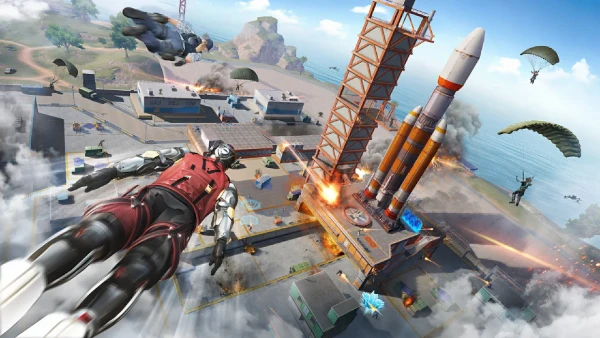
Blood Strike has changed significantly during 2026 rather than remaining tied to its original release formula. Updates have altered the Battle Royale economy, weapon availability, revival rules, maps and character balance. February introduced Wildcards and a rotating ground-weapon pool. March brought the Striker Alondra together with additional equipment and movement options. June added Team Deathmatch, while August introduced a limited-time third-person Battle Royale option with separate FPS and TPS matchmaking. These changes show that NetEase is willing to modify fundamental parts of the game rather than relying only on new cosmetics and small balance patches.
The September 2026 update continued that pattern. VOX arrived at the beginning of the month, followed on 22 September by Overdrive. NetEase describes Overdrive as a faster and more intense mode in which individual matches can use different rules. It also replaces normal ground pickups with a system that allows players to choose Wildcard buffs at set points, with as many as three selections during a match. Random tactical elements such as Piñata Drop crates and hot spring zones can also appear. It is not a replacement for standard Battle Royale, but it illustrates how Blood Strike increasingly experiments with the basic BR structure.
PUBG Mobile and COD Mobile are hardly static competitors. PUBG Mobile reached version 4.6 in September 2026 with the Midnight Hunters themed mode and continues to rotate major events, collaborations and Royale Pass seasons. COD Mobile launched Season 8, Against All Fate, in September with a Honkai Impact 3rd collaboration, an additional limited-time point of interest on Isolated and content spread across Multiplayer and Battle Royale. The difference is therefore not that Blood Strike updates while its rivals stand still. All three change frequently. Blood Strike’s distinction lies in how strongly many of its updates reinforce rapid combat, unusual character abilities and ways to keep players involved after a defeat.
Which Type of Mobile Battle Royale Experience Does Each Game Provide?
Blood Strike is most clearly suited to players who want battle royale matches with frequent contact and relatively little downtime. Its combination of Strikers, fast revival, in-match cash, shops, Wildcards and mobile movement means there is usually another immediate decision after a firefight. It also supports cross-platform multiplayer on PC through its Steam version, which broadens its audience beyond phones and tablets. The gunplay remains accessible enough for players familiar with mainstream first-person shooters, while the abilities provide extra variety without requiring extensive knowledge before the first few matches.
PUBG Mobile provides a more traditional survival-driven battle royale experience. Its larger maps, vehicle use, equipment management and emphasis on terrain make patience and rotation particularly important. A successful match can involve knowing when not to shoot, predicting the next safe position and preserving resources for the final circle. COD Mobile offers a different attraction: it combines Battle Royale with one of the largest collections of short-form multiplayer modes available in a mobile shooter. A player can spend one session in Battle Royale, move to Search & Destroy or Team Deathmatch, and then try a seasonal or extraction-based mode without leaving the same game.
Blood Strike therefore does not need to replace either rival to justify its place in 2026. It offers a different interpretation of mobile battle royale. PUBG Mobile still places traditional survival, maps and positioning at the heart of its identity, while COD Mobile combines battle royale with the broader structure and content cycle of Call of Duty. Blood Strike reduces downtime, gives playable characters a larger tactical role and continually experiments with systems that encourage another fight. For players comparing the three, the important difference is not simply graphics or weapon count, but the rhythm of a typical match: PUBG Mobile rewards calculated survival, COD Mobile provides variety across several shooter formats, and Blood Strike consistently pushes squads back into action.