
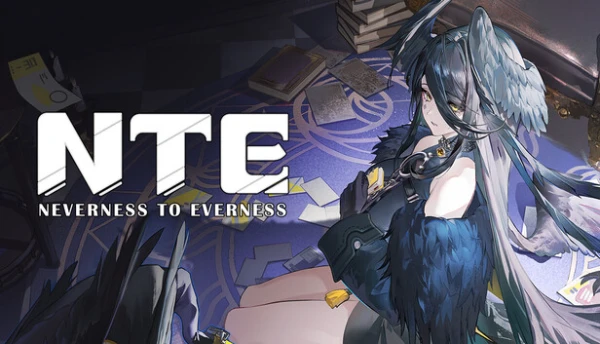
Neverness to Everness (NTE) brings supernatural mysteries into the everyday life of a modern city, combining open-world exploration, action combat and urban activities in one mobile RPG. Developed by Hotta Studio and published by Perfect World Games, the game launched on Android and iOS on 29 April 2026. Its setting is Hethereau, a sprawling metropolis where unusual creatures, mysterious incidents and people with extraordinary abilities are part of ordinary life. Players take the role of an Anomaly Hunter, investigating strange events while building relationships, travelling around the city and taking part in activities beyond the main storyline. From driving customised cars to decorating apartments, NTE offers considerably more than a sequence of battles. Its distinctive approach lies in making the supernatural feel like a natural part of a living urban environment.
Exploring the Open World of Hethereau
Hethereau is the central location in Neverness to Everness, replacing the traditional fantasy landscapes of many mobile RPGs with streets, shopping districts, residential neighbourhoods and modern buildings. The city combines familiar urban architecture with unusual details that reflect its supernatural population. Busy roads connect different areas, while smaller streets contain shops, restaurants and locations associated with local characters. Players can travel between districts, investigate unusual situations or simply spend time exploring. This urban setting gives the open world a recognisable structure: instead of crossing enormous stretches of wilderness, players navigate a metropolis with its own transport, businesses and social life. The contrast between familiar surroundings and extraordinary events is one of the game’s defining features.
The story begins when the player joins Eibon, an antique shop that accepts commissions involving Anomalies. Although the shop appears to be an ordinary small business, its work frequently leads into situations that conventional residents cannot handle. The protagonist is an unlicensed Anomaly Hunter, making this an unusual starting point for a character expected to investigate potentially dangerous supernatural incidents. Story missions introduce different parts of Hethereau, its organisations and the people who live there. Rather than presenting every unusual creature as an enemy, NTE portrays a society in which humans, supernatural beings and individuals with special abilities coexist. Some encounters involve conflict, while others develop into conversations, investigations or personal stories.
Exploration is supported by several ways of moving around the city. Players can travel on foot, drive vehicles and use transport systems designed for Hethereau’s unusual environment. The Ghost Train is particularly distinctive because it provides a way to travel through Anomaly space, offering an alternative to ordinary journeys along the roads. Vehicles are useful for longer trips, while travelling on foot makes it easier to notice smaller details around shops, neighbourhoods and mission locations. The game also features vertical movement and opportunities to reach areas above street level. These options make the city more interesting to navigate than a simple collection of destinations connected by menus.
Districts, Characters and Everyday Encounters
Hankaku Street is one of the important neighbourhoods introduced in the game’s urban setting. Its shops, local businesses and residents establish the more personal side of Hethereau, where individual stories unfold alongside the larger supernatural narrative. Players encounter characters connected to different organisations, neighbourhood communities and unusual occupations. The game’s Bagel social system also provides a way to develop connections with people encountered during the adventure. This emphasis on relationships gives exploration another purpose beyond collecting resources or completing objectives. Visiting a familiar district can lead to an interaction that reveals something about a resident, an organisation or the city’s complicated relationship with Anomalies.
The Bureau of Anomaly Control illustrates how Hethereau attempts to manage its extraordinary residents. In the game’s fictional society, supernatural beings are not necessarily hidden from the public; they may have to deal with administrative procedures and everyday responsibilities. This creates situations that are sometimes humorous rather than threatening. An unusual commuter, an eccentric shopkeeper or a mysterious customer can contribute to the city’s atmosphere without becoming part of a major boss encounter. Such details help explain why the location feels different from a conventional fantasy world. The strange and the ordinary continually overlap, giving players reasons to pay attention to the people around them.
Hethereau also benefits from environmental variety. Commercial areas, older neighbourhoods, transport routes and coastal scenery create recognisable changes in atmosphere as players move around the map. The city is particularly striking at night, when illuminated signs, streetlights and reflections reinforce its contemporary visual identity. Daytime exploration, meanwhile, places greater emphasis on architecture, traffic and everyday activity. Players interested primarily in exploration can spend time learning the layout of individual districts before concentrating on difficult missions. However, an attractive environment does not mean every building is accessible or every activity is interactive. The practical value of exploration depends on available missions, accessible locations and the activities supported in the current game version.
Supernatural Events, Story Missions and Combat
The supernatural elements of Neverness to Everness are built around Anomalies, unusual phenomena that can affect people, objects and entire locations. These incidents are central to the game’s identity and provide much of the reason for the protagonist’s work. An Anomaly might involve a strange creature, an unexplained disturbance or an environment behaving in ways that ordinary physical rules cannot explain. Investigations take players away from familiar routines and into situations where observation, movement and combat become important. The game uses these events to introduce unfamiliar characters and locations while expanding the larger mysteries surrounding Hethereau. As a result, supernatural activity is not simply decorative scenery but an essential part of the narrative.
Commissions provide a practical connection between the Eibon antique shop and the wider city. Residents approach the shop with unusual problems, creating opportunities for the protagonist and their companions to investigate. These assignments support the central storyline while giving individual incidents their own context. Some encounters emphasise the personalities involved, whereas others lead to dangerous confrontations or unusual environments. The structure allows NTE to move between light-hearted urban stories and more serious supernatural situations. Players following the narrative should pay attention to conversations and local circumstances, as these often explain why a particular disturbance matters and how it relates to the people affected.
Combat uses real-time action rather than traditional turn-based commands. Players assemble a team of characters with different weapons, powers and fighting styles, switching between them during encounters. Attacks can be combined with movement, dodging and character abilities to respond to enemy behaviour. The system includes Esper abilities and Esper Cycle effects, which encourage players to consider how different characters work together. Timing and team composition therefore matter, particularly when opponents require more than repeated basic attacks. On a touchscreen, the challenge is to balance movement, camera control and offensive actions without losing sight of enemy attacks. Learning a smaller group of familiar characters can be more useful initially than frequently changing teams without understanding their strengths.
Character Abilities, Team Building and Mission Variety
The playable cast includes characters with distinct combat identities. Mint, for example, uses claws and twin blades to deliver aggressive attacks, while Skia combines physical combat with shadow-related abilities. These differences influence how players approach encounters and choose characters for particular situations. A team benefits from abilities that complement one another, especially when character switching creates opportunities for more effective attack combinations. Rather than choosing members exclusively by their appearance or rarity, players should examine their available abilities, preferred attack range and role within the group. Understanding the timing of a character’s moves is particularly important during longer battles, where poorly timed attacks can leave an opening for enemies.
Character progression adds another layer to combat. Developing a reliable team involves upgrading available characters, improving their combat effectiveness and obtaining suitable resources through gameplay. NTE also uses character and equipment-related acquisition systems, including randomised rewards and optional purchases. These systems are worth understanding before spending premium currency, particularly because a newly obtained character may require additional materials to become useful in demanding encounters. Players who prefer not to spend money can focus on available rewards, progression opportunities and characters already in their collection. Since individual events and acquisition offers change between updates, the current in-game descriptions remain the appropriate reference for specific rates, guarantees and reward conditions.
Mission variety is important because the game combines investigations with conventional action encounters. Anomaly commissions, character stories and larger narrative chapters create different reasons to travel around Hethereau. Some sequences place greater emphasis on dialogue and unusual situations, while others require fighting or navigating unfamiliar surroundings. Cooperative stages provide additional activities involving other players, although these should not be confused with the entire story being a shared multiplayer campaign. Players looking for a more relaxed experience can alternate between combat missions and ordinary city activities. This flexibility helps prevent the open world from becoming a continuous sequence of battles, while still leaving substantial combat content for those who enjoy developing effective teams.
Urban Activities and Playing Neverness to Everness on Mobile
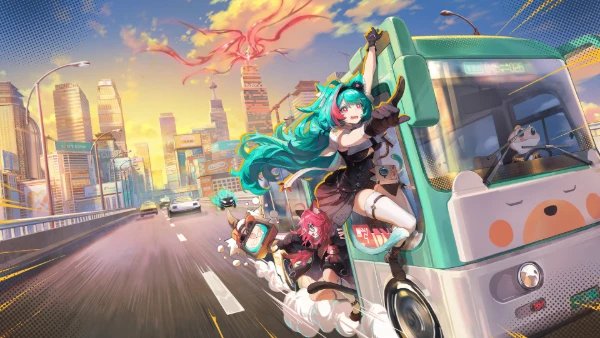
Urban life is a substantial part of NTE’s appeal. Players can acquire and customise vehicles, spend time travelling around Hethereau and participate in activities that are not directly connected to fighting Anomalies. Driving is more than a visual feature because the city contains an extensive network of roads and varied destinations. Personalisation options allow players to change aspects of their vehicles, while the surrounding streets provide opportunities to enjoy driving as an activity in its own right. The in-car radio adds to this experience, including music associated with Persona 5 and Tower of Fantasy. Such features help establish a recognisable urban atmosphere and provide a change of pace after demanding missions.
Property ownership and interior decoration offer another way to interact with the city. Players can acquire residential spaces and arrange furniture or decorations to suit their preferences. Housing creates a more personal connection with Hethereau because the character has somewhere to return between adventures. The game also includes business-related activities, allowing urban progression to extend beyond accommodation and vehicle ownership. These systems give players additional objectives that are separate from defeating enemies or advancing through story chapters. Available properties, decorative items and business functions can depend on progression and game updates, so players should check the relevant in-game conditions before committing resources to a purchase.
By autumn 2026, Neverness to Everness had also received several substantial updates following its April launch. Version 1.4, For Whom the Verses Mourn, introduced the character Blackbird, additional story content and the Pukaland location. The update also added activities connected with the new area, alongside further Anomaly commissions and Porsche collaboration vehicles, including the Porsche 911 and Porsche Taycan. These additions illustrate how NTE continues to expand its urban activities and supernatural storylines after release. They also make it important to distinguish the original launch content from later additions. A player starting in November 2026 encounters a broader range of characters, locations and activities than was available during the game’s first release.
Android and iOS Requirements, Controls and Cross-Platform Progress
Neverness to Everness is available as a free download on Google Play and the Apple App Store, with optional in-app purchases. According to the official launch requirements, Android devices need Android 10 or later and at least 20 GB of available storage, with a Snapdragon 855, MediaTek Dimensity 8000 or comparable processor listed as the minimum hardware level. The recommended Android processors include Snapdragon 8 Gen 2, Snapdragon 8 Gen 3 and MediaTek Dimensity 9200. On iOS, the minimum listed device is the iPhone 12 Pro Max running iOS 15 or later, while the recommended specification is an iPhone 14 Pro or newer running iOS 17 or later. At least 20 GB of free storage is specified for iOS as well. These figures are starting requirements rather than guarantees of identical performance on every device.
Mobile performance matters particularly in a game that combines detailed city environments, vehicle movement and fast-paced combat. A device that meets only the minimum requirements may need lower graphics settings to maintain comfortable responsiveness, especially during demanding battles or journeys through busy districts. Players should initially select moderate visual settings and adjust them after checking how the game performs. Stable frame rates and responsive controls are generally more useful during combat than maximum visual detail. A reliable internet connection is also necessary because NTE operates as an online game. Downloading large updates over Wi-Fi is sensible, and keeping additional free storage available can reduce problems when new content arrives.
Cross-platform progression is supported through the PWG account system, allowing players to continue their adventure across compatible mobile devices, computers and PlayStation consoles. This is useful for anyone who prefers longer sessions on a larger screen but wants to complete smaller tasks on a phone. However, account linking requires attention: different sign-in methods can create separate accounts, and progress is not shared between the game’s regional servers. The official server regions include Europe, America, Asia and Southeast Asia. Choosing the appropriate region and consistently using the same account are therefore important decisions before investing substantial time in the game. For mobile players, NTE offers an unusual combination of supernatural investigations, real-time action and city-based personalisation, although its relatively demanding hardware requirements mean the experience is better suited to capable smartphones than entry-level devices.